
Boxelder bugs are a common seasonal insect found across South Dakota and the Northern Great Plains. They feed and grow on host trees through spring and summer. When fall arrives, they leave those trees and look for warm places to spend the winter.
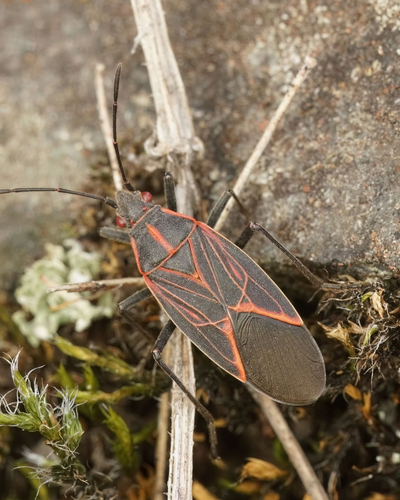 Adult boxelder bugs are about half an inch long. They are black with red or orange-red markings. The most easy to see pattern is red lines running along the wingsand thorax. The scientific name for this species is Boisea trivittata.
Young boxelder bugs, called nymphs, are smaller and bright red. They are active during warm months and easy to spot on host trees. As they get older, the black coloring grows and the red fades to markings along the edges.
Some homeowners mix up boxelder bugs with stink bugs. Boxelder bugs are narrower and clearly marked in black and red. Stink bugs are more shield-shape and tend to be brown, gray, or green. Once you know the difference, the two are easy to tell apart.
Boxelder bugs spend spring and summer on female boxelder trees and silver maples. These are their host plants. Female boxelder trees, known by their scientific name Acer negundo, produce seeds that boxelder bugs feed on.
When temperatures start to drop in fall, adults move away from host trees. They look for sheltered overwintering sites. These are protected spaces where they can survive the cold months. Wall voids, attics, and the spaces behind siding are common spots.
Overwintering means the bugs stay hidden and mostly inactive through winter. When warmth returns in spring, they become active again and move back outdoors.
Finding one or two boxelder bugs inside is not usually a sign of a big problem. But if you keep seeing them near windowsills, baseboards, or walls, your home likely has easy entry points. Repeated sightings mean bugs are finding a way in. That gap or crack needs attention.
Homes in Rapid City and the Black Hills with mature boxelder or maple trees nearby are most likely to have this issue each fall.
The main species involved in boxelder bug pest control in this region is Boisea trivittata, the black-and-red boxelder bug. This is the species tied to boxelder trees and silver maples in neighborhoods and along shelterbelts throughout the Black Hills.
Several other fall insects can look similar at a quick glance. Correct identification matters because the control approach differs between species.
| Type/Species | Size | Appearance | Habitat | Threat Level |
|---|---|---|---|---|
| Boxelder bug / Boisea trivittata | About 1/2 inch | Black with red/orange lines on wings and thorax | Boxelder trees, silver maples, exterior walls, home cracks | Nuisance pest; does not bite or damage wood |
| Stink bug | About 1/2 to 3/4 inch | Shield-shaped, brown/gray/green | Gardens, crops, homes in fall | Nuisance pest; may emit strong odor |
| Leaf-footed bug | About 3/4 inch | Brown, elongated body with leaf-like hind legs | Trees, shrubs, seed pods, structures in fall | Nuisance pest; can sometimes feed on plants |
Of these three, the boxelder bug is the most common overwintering nuisance pest in Rapid City. Its link to host trees makes it a repeating problem for homes near mature trees or shelterbelts common across the Black Hills.
Knowing the difference between a few stray bugs and a real boxelder bug infestation helps you decide what action to take. The signs range from outdoor clustering to indoor sightings.
The clearest early sign is a large group of bugs on your exterior walls. Boxelder bugs are drawn to warm, sunny south-facing and west-facing walls. These walls soak up afternoon sun and stay warm longer into the evening. On a warm fall afternoon in the Black Hills, you may see dozens or even hundreds of them gathered in one spot.
This clustering behavior usually spikes in September and October in Rapid City. If you notice it, bugs are likely getting ready to enter the structure soon.
Boxelder bugs get inside through small gaps that are easy to miss. Common entry points include:
Once inside, they tend to hide in wall voids, attics, behind baseboards, and around windowsills. These are their indoor harborage spots, meaning the places where they hide and stay warm.
Crushed boxelder bugs leave a reddish-brown stain. Their droppings can also leave small marks on walls, curtains, and windowsills. These stains are not toxic, but they are a nuisance and can be hard to clean from light-colored surfaces.
If you see stains along with live bugs, the population inside is likely larger than what you see on the surface.
Boxelder bugs are nuisance pests. That label means something specific: they cause annoyance, but they do not pose the kind of risks that other pests do.
They do not bite. They do not sting. They do not spread disease. They do not damage wood or weaken any part of your home’s structure. Homeowners in Rapid City and across the Black Hills do not need to worry about them causing physical harm or structural damage.
The real problems are comfort and cleanliness. A large indoor population means bugs on your walls, windowsills, and curtains. It means staining from droppings and crushed bodies. It means the ongoing job of removing them all through fall and winter.
They may sometimes feed on seeds and soft plant material, but this damage is usually very small. The core issue is that a fall swarm in South Dakota can push hundreds of insects toward your home in days. An unsealed home makes that problem much worse.
Boxelder bug pest control is not about getting rid of a danger. It is about keeping your home clean and comfortable through the fall season.
The Black Hills region creates perfect conditions for seasonal boxelder bug activity. The area has many mature trees, shelterbelts, and yard trees that support large populations through spring and summer. When fall arrives, all of those insects need somewhere to go.
Female boxelder trees are the key driver. These seed-bearing trees provide the food that lets boxelder bug populations grow. University reports show that infestations are worse when female boxelder trees are within about 200 feet of a home. Many Rapid City neighborhoods have exactly those conditions.
South-facing and west-facing walls soak up the most afternoon sun. In the Black Hills, sunny fall days are common well into October. These walls stay warm and become natural gathering points for bugs moving away from cooling host trees.
The timing window runs from late August through October. Natural boxelder bug control in this region means getting ahead of that window. Once cool nights begin, bugs are already on the move. The best prevention happens before the first big temperature drops.
Extension resources note that good prevention focuses on reducing access to structures and treating before fall swarming begins. That timing advice fits Rapid City’s climate and seasonal patterns.
Boxelder bugs do not swarm by accident. Their fall behavior follows a clear pattern tied to temperature and daylight changes. Knowing that pattern helps homeowners act at the right time.
As September and October bring cooler temperatures to the Black Hills, boxelder bugs stop feeding on host trees and start looking for shelter. This is called a fall migration or seasonal aggregation. Large numbers of adults move at about the same time. This is why infestations can seem to appear overnight.
They are not entering your home because of food. They are entering because it is warm inside and cold outside.
After gathering on warm exterior walls, boxelder bugs start looking for entry points. Small cracks around windows and doors are common. So are gaps along soffits, open foundation cracks, and unsealed utility holes. These are all places where a bug about half an inch long can squeeze through easily.
Once inside, they move into sheltered cavities. Wall voids, attic spaces, and areas behind baseboards become their hiding spots through winter. They are not active indoors during cold months, but they are still there.
When your home’s heat warms the wall voids and attic spaces where boxelder bugs are hiding, they can become active again. This is why homeowners sometimes see bugs crawling out of walls on warm winter days or showing up in bigger numbers in early spring.
If you see this, it confirms bugs spent the winter inside the structure. Vacuuming is the best way to remove them indoors. Crushing them leaves stains. That staining is one of the main nuisance complaints about boxelder bug infestations in houses.
JanTech Pest Control uses a step-by-step process for boxelder bug control in Rapid City and the Black Hills. The goal is not just to treat visible bugs but to reduce future access and stop overwintering before it starts.
1. Inspection
The process starts with a full inspection of the outside. JanTech checks the south and west sides of the home first, since these walls attract the most activity. The inspection covers windows, door frames, soffits, the roofline, utility holes, and foundation cracks.
If bugs are already getting inside, the inspection also includes attic spaces and wall void access points to see where they are hiding.
2. Identification
JanTech confirms whether the pest is a boxelder bug or a lookalike like a stink bug. This step matters because the treatment approach can be different. The team also figures out if the problem is mainly outdoor clustering or an active indoor invasion.
3. Treatment Plan
Based on the inspection, JanTech makes a plan that fits the home. Some houses need a perimeter-only plan. Others need a combined outside and inside approach. Timing is part of the plan. The best prevention window in Rapid City is late August through September. This is before major fall cooling pushes bugs indoors.
4. Exterior Application
JanTech applies a seasonal exterior treatment along the edge of the home. This includes siding edges, the foundation line, soffits, and window and door trim. The treatment focuses on the areas where boxelder bugs gather and enter.
This is a targeted application. A boxelder bug spray used as part of a perimeter barrier treatment works best when it is part of a bigger prevention plan, not a quick fix.
5. Interior Response
If bugs are already inside, JanTech handles them without making the staining problem worse. Vacuuming active bugs is better than crushing them. Targeted interior treatments are used only where needed. They focus on entry points and hiding areas rather than treating the whole inside.
6. Exclusion Work
Exclusion means sealing the ways bugs get in. JanTech uses silicone caulk to fill cracks, repairs damaged screens, and puts in or replaces door sweeps. Vents and openings that let bugs in are screened where possible.
This step is what changes a temporary fix into lasting boxelder bug pest control.
7. Follow-Up and Prevention
Because boxelder bugs come back every year, JanTech suggests annual fall service. One treatment can fix a current problem. Annual service keeps future invasions under control. Where possible, JanTech may also advise reducing the number of female boxelder trees close to the home as a long-term way to cut down the source.
Contact JanTech Pest Control at 605-391-9998 for a free boxelder bug inspection in Rapid City and the Black Hills area.
Homeowners can do a lot to reduce fall invasions before calling a professional. These steps work best when done in late August to mid-September in Rapid City, before the main swarming starts.
Seal gaps and cracks. Use silicone caulk around windows, doors, siding seams, foundation gaps, and utility holes. Silicone holds up to weather changes better than other caulk types.
Repair screens. Check window and door screens for tears or gaps. Even a small hole is enough for boxelder bugs to get through.
Install or replace door sweeps. A tight door sweep keeps bugs from sliding under exterior doors. Check old sweeps for wear, especially at the bottom corners.
Screen vents and openings. Attic vents, soffit vents, and chimney openings are common entry zones. Fine mesh screening over these openings blocks seasonal bugs without cutting off airflow.
Reduce nearby host trees. If possible, think about removing female boxelder trees within about 200 feet of your home. This is not always an option, but it is the most effective natural boxelder bug control measure for reducing seasonal pressure over time.
Vacuum indoors. If bugs are already inside, vacuum them up instead of crushing them. Throwing the vacuum bag in a sealed bag outside keeps the problem from making a mess.
Hose down clusters. A strong stream of water can knock visible outdoor clusters off walls. This is a temporary fix, but it can cut down the number of bugs gathering near entry points.
Natural boxelder bug control is really a mix of sealing, habitat reduction, and physical removal. There is no single homemade spray that stops a seasonal infestation. The most effective approach combines these steps with the right timing.
For homes with heavy fall pressure in the Black Hills, pairing these steps with professional perimeter treatment gives the best results.
Some boxelder bug problems are manageable with basic sealing and a careful watch. Others need a professional. Knowing the difference saves time and frustration.
DIY steps may be enough when:
It is time to call a boxelder bug exterminator when:
Professional help makes the biggest difference when sealing alone is not stopping seasonal invasions. JanTech can reach gaps and areas that are hard to get to. We apply targeted perimeter barrier treatments at the right time. We can also set up an annual prevention plan that cuts down the problem year after year.
One-time spraying rarely fixes a repeating boxelder bug problem. Ongoing annual prevention, combined with sealing work, is usually what breaks the cycle.
Call JanTech Pest Control at 605-391-9998 for boxelder bug control in Rapid City and the Black Hills.
Adult boxelder bugs typically live about one year. They spend the winter in sheltered spots and become active again in spring. Because adults survive the winter, the same population that entered your home in fall can come out when temperatures warm up. This is why annual prevention is often needed.
No. Boxelder bugs do not damage wood, insulation, or any structural part of your home. They do not chew through materials the way termites or carpenter ants do. The main concerns are nuisance swarms and staining from droppings or crushed bugs on walls, curtains, and windowsills.
Warm, sunlit exterior walls attract them first. As fall cooling begins in South Dakota, bugs leave host trees and look for sheltered overwintering sites. Homes with south-facing or west-facing walls that stay warm in the afternoon sun are especially attractive. Nearby female boxelder trees and silver maples increase the population pressure a lot.
Late August to mid-September is the best prevention window in Rapid City. Treating during this time targets bugs before the main fall swarming starts. Once temperatures drop sharply, many bugs may already be moving toward homes or inside them. Getting ahead of that timing makes treatment much more effective.
There is usually no single permanent fix when female boxelder or silver maple trees are nearby. These trees keep making food and shelter for new populations each year. Annual sealing work and fall perimeter treatment are typically needed to keep invasions under control. Removing host trees close to the home can reduce pressure over time, but most homeowners find annual service is still the most practical long-term approach.
Natural methods can help reduce the problem. Sealing gaps with silicone caulk, repairing screens, adding door sweeps, and vacuuming indoor bugs are all useful steps. Removing nearby female boxelder trees is the most powerful natural control option. These measures work well for mild cases, but heavy or repeating infestations in the Black Hills often still need professional boxelder bug pest control to get results.
JanTech Pest Control provides boxelder bug control throughout Rapid City, the Black Hills, and nearby South Dakota towns. We understand how local tree density, fall weather, and regional cooling drive this pest’s behavior.
The problem is very common in neighborhoods with mature boxelder trees and silver maples. These trees are all over Rapid City and the Black Hills. This makes seasonal swarms a shared worry for many homeowners and businesses in the area.
Western South Dakota’s fall temperature swings create the exact pressure that drives bugs toward warm buildings. JanTech’s services are ready for both homes and light business properties. Whether it is a house in a tree-lined Rapid City neighborhood or a building along a Black Hills shelterbelt, the pest behavior is the same. The solution follows the same proven process.
For local pest control services, visit JanTech Pest Control.
Boxelder bugs are not the only fall home invader in the Black Hills. If you are dealing with similar pests or want wider seasonal protection, JanTech also offers:
These services work together as part of a full seasonal pest management plan for your home or property.
Boxelder bugs are repeating seasonal pests. They come back every fall, and they will keep coming back as long as host trees are nearby and entry points are open. The good news is they are very manageable with the right plan.
Prevention works best before fall swarming starts. Sealing gaps, fixing screens, and adding door sweeps all help. Pairing those steps with a professional perimeter treatment in late August or September gives Rapid City homeowners the best chance of keeping bugs outside.
JanTech Pest Control offers inspection, targeted treatment, sealing work, and annual prevention planning for homes and businesses across the Black Hills and nearby South Dakota communities. A boxelder bug exterminator does not just treat the bugs you can see. The right approach reduces future access and stops the cycle from repeating every year.
Call JanTech Pest Control at 605-391-9998 for boxelder bug control in Rapid City and the Black Hills.