
Stink bug control is how you stop these fall pests from getting into your home. It involves sealing up entry points, treating the outside of your house, and vacuuming up any bugs that get inside. For homes in Rapid City and the Black Hills, the most effective method is a seasonal perimeter treatment applied in late summer. This treatment happens before stink bugs start looking for a warm place to spend the winter. Once they are inside, they hide in attics, walls, and around windows. This makes them very difficult to deal with.
If you see stink bugs in your house, do not crush them. Use a vacuum cleaner. Crushing them releases a strong, bad smell from their defensive glands. Many people say the smell is like rotten vegetables. Vacuuming reduces the odor and removes the bugs without making a mess.
Stink bug pest control in South Dakota works best as a prevention plan. Taking action before the first fall frost gives you the best chance to stop an infestation. If you are looking for stink bug control near me, JanTech Pest Control serves Rapid City and the Black Hills area with seasonal treatment and inspection services.
Knowing which stink bug you have helps choose the right control method. Two main types are found in South Dakota. The brown marmorated stink bug is the one most likely to get into your home. Native stink bugs also live here but usually stay outside. 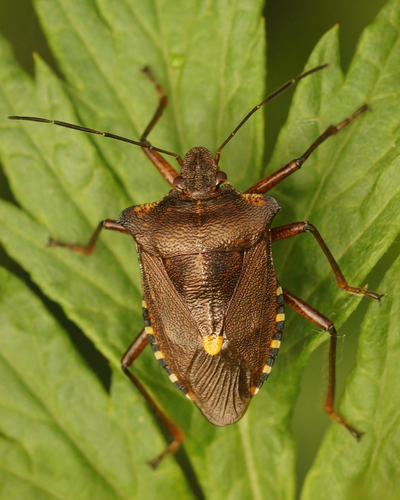
The brown marmorated stink bug, or BMSB, is an invasive pest from Asia. It was first found in the United States in Pennsylvania in 1998. Since then, it has spread across the country, including South Dakota and the Northern Plains.
BMSB is about three-quarters of an inch long. Its body is shaped like a shield and is a mottled grayish-brown color. You can identify it by the white bands on its antennae and the light and dark bands on its legs. These features make it different from most native stink bugs. In Rapid City and the Black Hills foothills, this is the type you will most often find on your walls in fall or inside your home in winter.
South Dakota has native stink bug species too. They have the same shield shape but usually have less mottled coloring. Native bugs live outdoors in fields, gardens, and plants. They are much less likely to come inside in large numbers like the BMSB does.
| Species | Size | Appearance | Habitat | Threat Level |
|---|---|---|---|---|
| Brown Marmorated Stink Bug | About 3/4 inch | Mottled grayish-brown, shield-shaped, white-banded antennae, banded legs | Homes, attics, walls in fall; crops outdoors | High nuisance indoors; serious agricultural pest outdoors |
| Native Stink Bug Species | Variable, similar shield shape | Variable colors, generally less mottled | Outdoor vegetation, fields, landscapes | Low to moderate indoors |
For homes near rural areas or field edges outside Rapid City, you might see both types. However, stink bug pest control in the Black Hills focuses mainly on brown marmorated stink bug control because that invasive species causes most fall home invasions.
Spotting a stink bug problem early helps you act before it gets worse. Look for these clear signs each fall.
The first sign is often dozens of stink bugs grouped together on the sunny outside walls of your house. This happens in late summer and early fall as the weather cools. In Rapid City, this clustering is common on south and west-facing walls because they stay warmest during the day.
After gathering outside, the bugs move indoors. Check near windows, curtains, light fixtures, and along the tops of walls. Attics are a favorite hiding spot. You might also find dead stink bugs on windowsills or inside light fixtures.
Another clear sign is the smell. Stink bugs release a sharp, strong odor when they are bothered or crushed. Many people say it smells like rotten vegetables or a harsh chemical. If you notice that smell in a room, look for bugs nearby.
Stink bugs also use pheromones. These are chemical signals that attract other stink bugs to the same spot. This means if you find one bug, more are probably nearby or on the way. Start stink bug removal as soon as you see these signs to keep the numbers down.
After the first cool fall nights in the Black Hills, indoor sightings often increase fast. If you see bugs regularly around windows or vents, an infestation is likely already happening.
Stink bugs are nuisance pests. They are not a direct threat to people or pets. They do not bite, sting, or spread diseases. They also do not chew through wood, damage insulation, or harm your home’s structure.
Their main problems are their bad smell, how annoying they are, and seeing large groups inside. A heavy infestation can be stressful, but it is not a safety emergency.
Still, stink bug pest control matters for another reason. The brown marmorated stink bug is a serious farm pest. It damages fruit, vegetables, and crops by poking holes in plants and feeding on them. For properties near Rapid City that are close to farms, orchards, or open land in South Dakota, this pest can cause real crop damage.
Properties near farms may also see more bugs in fall. More bugs in the area means more pressure on nearby homes when the bugs look for a winter shelter. Brown marmorated stink bug control is very important in these cases.
Stink bugs become a big problem in late summer and early fall. In South Dakota, September and October are the peak months. As days get shorter and cooler, stink bugs start looking for warm, safe places to spend the winter. This is called overwintering.
Homes are perfect overwintering sites. Stink bugs like heat and light. They gather on warm surfaces and then look for any small opening to get inside. South-facing and west-facing walls are especially attractive because they hold heat from the afternoon sun.
At Rapid City’s elevation of about 3,200 feet, fall temperatures can change fast. One week might feel like summer, and the next can bring freezing nights. These sudden drops trigger stink bugs to move quickly. Homes that are not sealed up are at high risk.
Entry points include small cracks around windows and doors, gaps in siding, vents, soffits, rooflines, utility lines, foundations, and chimneys. Stink bugs do not need a big opening. They can squeeze through very small spaces. Light-colored siding and sun-exposed walls usually show the most activity.
Rural homes near farms or open land in the Black Hills face even more pressure. Stink bugs that fed on crops all summer move toward buildings once harvest ends and nights get cold. Homes near field edges can see large numbers arrive all at once.
Professional stink bug control works best when it is planned and timed right. JanTech Pest Control follows a clear process to stop stink bugs before they become a major indoor problem for Rapid City and Black Hills homeowners.
The process starts with a full check of the outside and inside of your home. JanTech looks for entry points and activity hotspots. This includes windows, doors, vents, siding gaps, soffits, rooflines, attic access points, and utility lines. Any bug clusters on sunny walls are noted. This step shows where bugs are getting in and where they are gathering.
Next, JanTech confirms which stink bug species is present. Knowing if the problem is brown marmorated stink bugs or native species helps shape the right plan. It also matters if bugs are mostly outside, starting to come in, or already hiding inside. Each situation needs a slightly different approach.
Based on the inspection and identification, JanTech makes a treatment plan. For most Rapid City homes, this means a late-summer exterior treatment before bugs move inside. The focus is on south and west-facing walls, window frames, doors, eaves, and roofline areas. A residual insecticide is used to create a barrier that stops bugs from entering.
A residual insecticide is a product that stays active on surfaces for a while after it is applied. This is different from a contact spray that only works right away. The residual barrier gives ongoing protection during the key fall season.
JanTech applies the perimeter treatment to the outside of your home before the first fall frost. In Rapid City, this work is done in late August through September for the best results. Pairing the treatment with sealing tips gives homeowners the most protection.
Spraying inside alone is far less effective than stopping stink bugs outside. The goal is to create a barrier before bugs ever get in. Vacuum removal is still the best way to deal with any bugs that do get inside. Vacuuming avoids the bad odor from crushing, and you can empty the vacuum outside to get rid of the bugs completely.
If stink bug activity continues or comes back the next fall, JanTech offers seasonal service and another inspection. Annual fall service is a good idea for homes with repeated problems. For bugs already hidden deep in attics or walls, JanTech gives advice on how to manage those hard-to-reach areas.
Sealing and exclusion are part of a long-term prevention plan, not just a one-time fix. Stink bug control near me should mean reliable, seasonal support, not a single visit.
Need help with stink bug control in Rapid City? Contact JanTech Pest Control at 605-391-9998 for inspection and seasonal treatment.
Homeowners can take several steps to reduce stink bug problems. Exclusion, which means physically blocking bugs from getting in, is the best long-term strategy. No spray works as well as keeping bugs out in the first place.
Here are the key prevention steps for Black Hills and Rapid City homes:
For homes near rural areas or with large sunny walls, using all of these steps together is important. The more entry points you close and the sooner you act, the better your protection will be through the fall.
Dealing with a few stink bugs yourself is fine. If you find one or two bugs near a window now and then, vacuuming them up and checking your screens may be enough.
But there are clear signs that it is time to call a professional for stink bug control near me.
Call JanTech Pest Control when:
For repeated fall invasions, professional brown marmorated stink bug control is the most reliable choice. Exterior treatment, applied before cold weather pushes bugs inside, targets the problem at the source. Once bugs are already hiding in walls or attics, removal is much harder.
Black Hills homes with large south or west-facing walls and older siding or windows often benefit most from professional service. The size of these homes and the number of possible entry points makes DIY sealing difficult to do completely.
Business properties in Rapid City face extra challenges. Larger buildings have more possible entry points and more exposure. A seasonal prevention plan from a professional gives businesses the consistent protection they need each South Dakota fall.
For stink bug control in Rapid City and the Black Hills, call JanTech Pest Control at 605-391-9998 to schedule inspection and seasonal treatment.
Stink bug season in South Dakota runs from late August through October. This is when bugs are most active outside and moving toward homes. Indoor sightings can continue into winter because stink bugs overwinter in protected spaces like wall voids and attics. They stay hidden and mostly dormant until warm weather returns in spring.
Stink bugs have special glands that release a defensive odor when they are threatened or crushed. The smell is meant to drive away predators. It is sharp and unpleasant, often compared to rotten vegetables or a strong chemical. Always use a vacuum to remove stink bugs indoors. Crushing them makes the smell much worse and can linger.
Yes. Vacuuming is one of the best methods for stink bug removal indoors. It picks up the bugs without releasing their odor the way crushing does. After vacuuming, empty the bag or canister outside right away. This keeps the smell from building up inside the vacuum or in your home.
No. Stink bugs do not bite, sting, or spread disease. They are a nuisance pest, not a health threat. The only real impact they have indoors is the odor and the discomfort of seeing large numbers of them. Pets that try to eat a stink bug may be put off by the smell, but stink bugs are not toxic.
Stink bugs do not damage the structure of your home. They do not chew through wood, damage wiring, or harm insulation. However, they can leave stains on surfaces, and large indoor clusters are a recurring nuisance. Brown marmorated stink bugs are a serious problem for crops and gardens, but inside your home, the main concern is odor and presence, not structural damage.
Stink bugs are drawn to warm surfaces. In fall, south-facing and west-facing walls get the most direct sunlight and hold heat longer than shaded areas. Stink bugs gather on those warm surfaces as they look for shelter before overwintering begins. Homes with large sun-exposed walls in the Black Hills often see heavier clustering than homes with more shade or north-facing exposure.
Stink bug control comes down to one main idea: prevention works better than reaction. Sealing entry points, reducing light attraction, and applying exterior treatment before the first fall frost are the most effective steps any Rapid City homeowner can take. Waiting until bugs are already inside your walls or attic makes the problem harder to fix.
The brown marmorated stink bug is now well established across South Dakota, and Black Hills homes face seasonal pest pressure every fall. The good news is that a consistent seasonal plan, starting in late August and repeated each year, can keep stink bug numbers manageable.
JanTech Pest Control serves Rapid City, the Black Hills, and nearby South Dakota communities with professional stink bug pest control built around local conditions. The team understands the timing of fall temperature drops, the specific entry point vulnerabilities common to homes in this region, and the treatment approaches that work best here.
Stink bug prevention is not a one-time fix. It is a seasonal habit. With the right exterior barrier, proper sealing, and follow-up service when needed, your home can stay protected year after year.
Need stink bug control in Rapid City? Call JanTech Pest Control at 605-391-9998 to schedule inspection, treatment, and seasonal prevention.